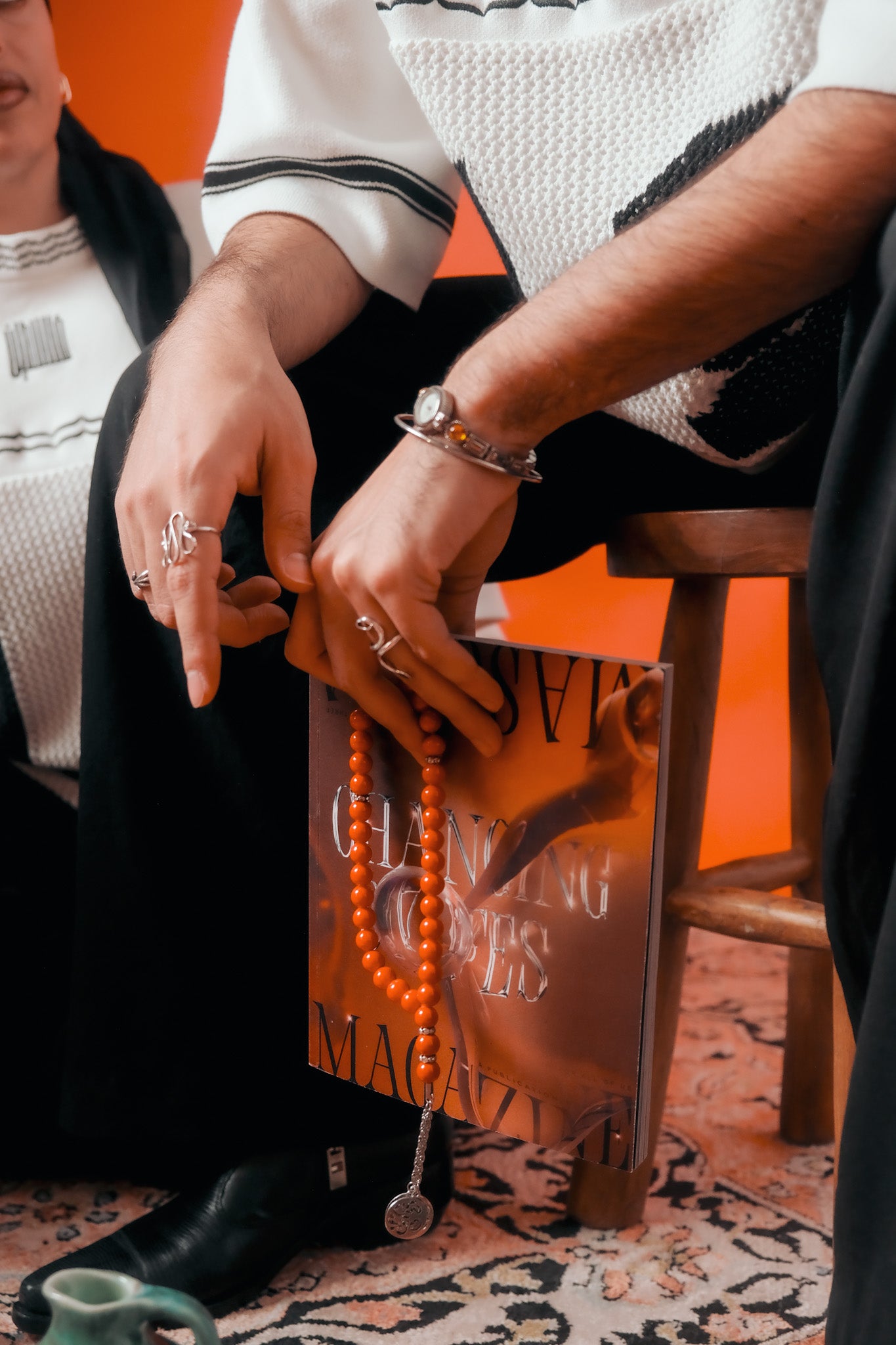

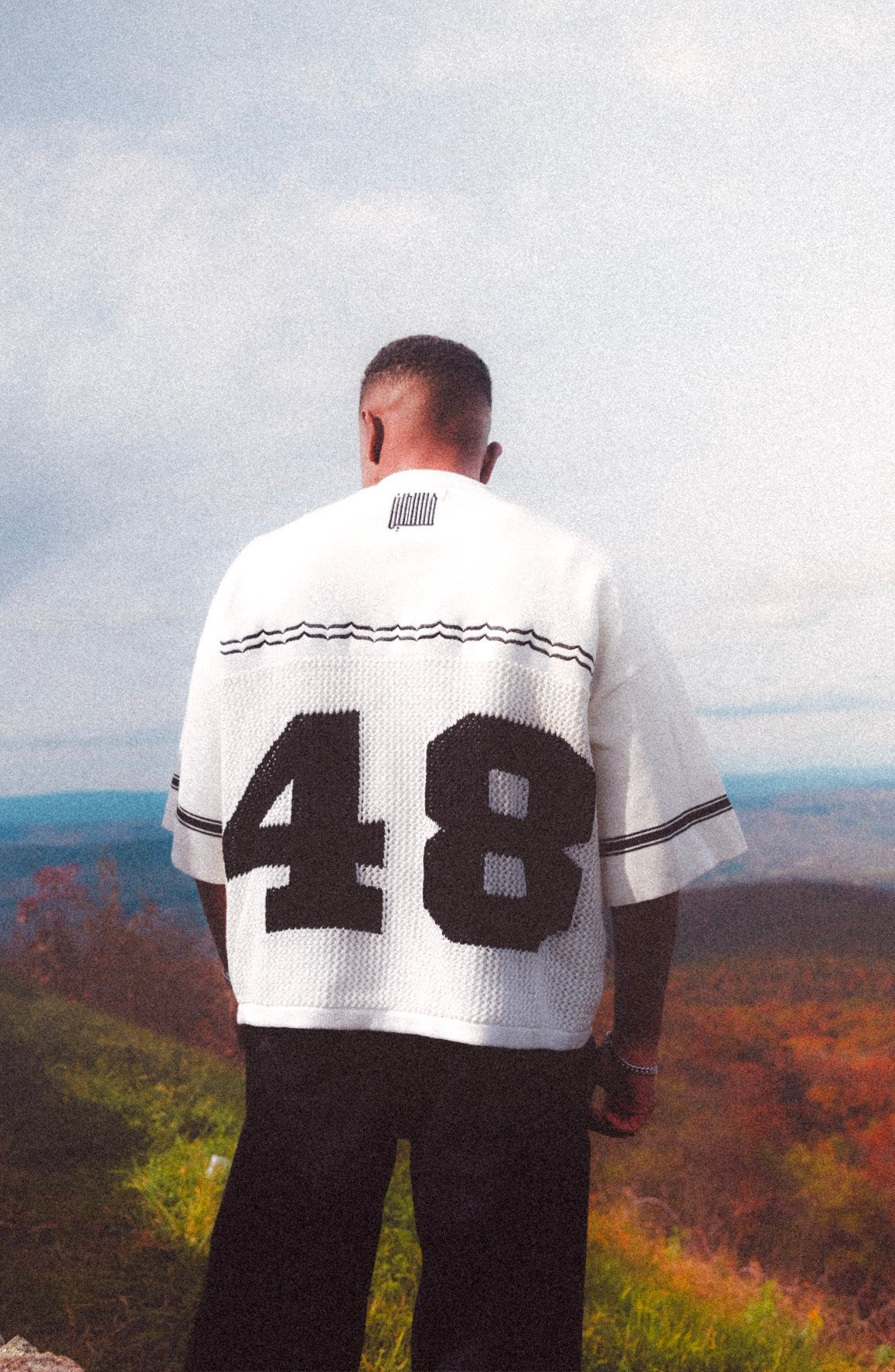
Sumud: The Untranslatable Word Behind "For the Steadfast"
Some words don't survive translation. They get to the border of another language, hand over their passport, and arrive on the other side missing something essential.
Sumud is one of those words.
Your dictionary will tell you it means "steadfastness." That's true the way a map of the ocean is true — accurate, and nowhere near the thing itself. Because sumud isn't just the act of standing firm. It's a whole philosophy of how to exist when existing is the hardest thing you're asked to do. It's the decision, made fresh every morning, to remain. To plant. To repair the wall. To send the kids to school. To press the olives this year, and next year, and the year after that, no matter what.
When we changed our slogan to "For the Steadfast," this is the word we were reaching for. And we owe you the story of why.
A Word You Learn from Grandparents, Not Textbooks
Nobody sits you down and teaches you sumud. You absorb it.
You absorb it watching a grandmother tend a garden in soil that has given her every reason to quit. You absorb it in the way an uncle rebuilds — not once, dramatically, but continually, quietly, as a matter of routine. You absorb it in the stubborn ordinariness of people who keep baking bread and hanging laundry and celebrating weddings in circumstances that would flatten most of us.
That's the secret most people miss about sumud: it isn't loud. It's not the raised fist or the dramatic stand — though it can hold those too. At its core, sumud is the quiet, daily, unphotogenic work of continuing. It's endurance with dignity. Persistence as identity.
The Palestinian poet Mahmoud Darwish spent a lifetime circling this idea — that remaining, in itself, can be a form of expression. That presence is a statement. You don't need to say anything when your existence already says: still here.
A Root Deeper Than Culture: Sabr
And beneath sumud lies something older still.
Long before steadfastness was a cultural posture, it was a divine instruction. The Quran returns to the concept again and again through the word sabr (صبر) — patience, perseverance, steadfast endurance. "Indeed, Allah is with the steadfast" (Quran 2:153). The sabirin — the steadfast ones — are promised glad tidings precisely because they hold firm through loss and hardship (2:155). And one of the final verses of Surah Al-Imran distills it into a command: be steadfast, and outdo one another in steadfastness (3:200).
This is why sumud runs so deep in the culture. It isn't just a survival strategy that hardened into identity — it's a spiritual inheritance. For generations, people have endured not merely because they had to, but because they understood endurance itself as an act of faith. The grandmother in her garden isn't only being stubborn. She's practicing something her Lord asked of her.
So when we say "For the Steadfast," understand the full depth of the well we're drawing from: a Quranic virtue, carried through a people's story, expressed in a word no dictionary can hold.
The Olive Tree: Sumud You Can Touch
If sumud had a body, it would be an olive tree.
Walk through the hills of Palestine and you'll pass trees that were old when your great-great-grandparents were born. Some are estimated to be over a thousand years old — gnarled, twisted, split down the middle by centuries — and still producing fruit every autumn. Not surviving. Producing.
Think about what an olive tree asks of the person who plants it. You dig the hole knowing you may never taste the best harvests. The tree is a letter to people you'll never meet. Planting one is an act of almost irrational faith in the future — which is to say, it's an act of sumud.
This is why olive leaves are woven into the traditional keffiyeh pattern. This is why the olive branch means peace in half the world's languages. And this is why, when we design at KADENCCI®, the olive tree keeps finding its way into our work — in motifs, in the olive-branch details on our storefront, in the DNA of pieces like the Keffiyeh Knit Jersey. We didn't choose the symbol. Honestly, it chose us.
Why a Streetwear Brand Is Talking About Any of This
Fair question. Let's answer it straight.
Fashion has a soul problem. The industry produces more clothing than any generation in history has ever worn, and almost none of it means anything. A graphic gets designed on Tuesday, printed on Thursday, trending by the weekend, landfilled by spring. The clothes are disposable because the ideas behind them were disposable to begin with.
KADENCCI® was founded on a different bet: that people are starving for the opposite. For garments with roots. For design that comes from somewhere and stands for something. We call our philosophy cultural minimalism — taking the most meaningful elements of heritage and translating them into clean, modern pieces that live in the real world, not in a museum case.
But philosophy is cheap if it stays on the About page. So we built sumud into how the brand actually operates:
We design slowly, on purpose. Every motif on a KADENCCI® piece is researched before it's rendered. The fishnet weave, the trade-route lines, the olive leaves — they appear because they mean something, and we can tell you what. If we can't explain an element, it doesn't ship.
We source ethically, without exceptions. A brand built on the dignity of a culture can't be built on the exploitation of the hands that make it. Full stop.
We feed people with every purchase. Our philanthropy model ties meals directly to products sold — not as a holiday campaign, but as permanent architecture. Sumud is communal. Nobody remains standing alone. A brand inspired by that value has an obligation to hold someone else up.
"For the Steadfast" — Who Is That, Exactly?
Here's the part we love most about the new slogan: the steadfast are not one people.
Yes, the phrase is rooted in sumud, and we will always name that inheritance clearly. But steadfastness itself belongs to anyone who has ever had to practice it:
The immigrant parent working a double so their kid's life can be wider than theirs was. The student three years into a degree that's testing everything they have. The founder rebuilding after the first version failed. The person in recovery counting days. The one carrying grief and still showing up. Anyone who has learned that the real work of a life isn't the dramatic moment — it's the eight thousand ordinary mornings where you decide, again, to continue.
If you've ever gritted your teeth and remained — remained kind, remained hopeful, remained yourself — the slogan is talking to you.
That's who we make clothes for. Not for a demographic. For a disposition.
Wearing Meaning in a World of Merch
There's a difference between merch and meaning, and you can feel it the moment you put a garment on.
Merch decorates you. Meaning accompanies you. A piece rooted in sumud does something a trend-cycle graphic never can: it holds its significance on the hard days, not just the good ones. It's there in the job interview. It's there at the airport at 5 a.m. It's there on the anniversary you dread. And every time you catch the pattern in a mirror, it says the quiet thing back to you: still here.
That's the real product. The cotton and the mohair and the knit construction — those are just the delivery mechanism.
When someone stops you and asks about the pattern (they will), you'll have something true to say. You can tell them about a word that doesn't translate. About trees that outlive empires. About a people whose answer to a century of upheaval has been to keep planting. And about a brand that decided all of that was worth more than another logo tee.
A Closing Thought, from Us to You
We named this brand's new chapter "For the Steadfast" because we believe steadfastness is the most underrated virtue of our time. The culture celebrates the pivot, the exit, the overnight anything. Nobody throws a parade for the person who simply refused to stop.
Consider this your parade.
Whatever you're enduring, whatever you're building, whatever you're refusing to let go of — we see the sumud in it. The olive trees would recognize you.
Remain. Keep planting. Press the harvest.
For the Steadfast.