
The Keffiyeh: How a Centuries-Old Pattern Became the Heartbeat of Modern Streetwear
There's a moment that happens when someone sees the keffiyeh pattern for the first time — really sees it. Not as a print. Not as a trend. But as a story woven into fabric.
Maybe it happened to you in an airport, watching an elderly man adjust the black-and-white cloth draped over his shoulders with the kind of care you reserve for something sacred. Maybe it was a photograph — grainy, decades old — of farmers in the hills outside Ramallah. Or maybe it was more recent: a knit jersey on someone in your city, the familiar geometry reimagined in stitchwork, and you thought, there's something more to that.
There is. And that "something more" is exactly why we built KADENCCI® around it.
What Is a Keffiyeh, Really?
Let's start with the basics, because the keffiyeh deserves better than a one-line definition.
The keffiyeh (also spelled kufiya, hatta, or shemagh depending on the region) is a traditional square scarf, usually made of cotton, worn across the Middle East for centuries. Its most recognizable form — the black-and-white fishnet pattern associated with Palestine — carries layers of meaning that most people walking past it on the street never learn.
Look closely at the traditional pattern and you'll find three recurring motifs, each with its own story:
The fishnet weave. Often connected to the Mediterranean Sea and the fishermen who worked its waters — a nod to livelihood, sustenance, and the coastal identity of historic Palestine.
The bold lines. Frequently interpreted as the trade routes that ran through the region for millennia, carrying goods, ideas, and people across the crossroads of three continents.
The olive leaves. Perhaps the most poignant of all. The olive tree is everything in Palestinian culture — resilience, rootedness, peace, and the patience of a people who plant trees knowing their grandchildren will harvest them.
None of this is decoration. It's documentation. The keffiyeh is a textile archive of a place and its people.
From Farmers' Fields to Global Symbol
The keffiyeh didn't start as a statement. It started as a tool.
For generations, it was practical headwear for farmers and Bedouins — protection from the sun in summer, warmth in winter, a shield against dust and wind. It belonged to working people. It smelled like soil and sea salt and long days.
That began to change in the 1930s, when the keffiyeh became a unifying symbol during a period of upheaval. Palestinians across class lines — city dwellers and villagers alike — adopted it as a marker of shared identity. What had been the garment of the countryside became the garment of a people.
By the latter half of the 20th century, the keffiyeh had traveled far beyond the region. It appeared on university campuses, in music scenes, on the shoulders of people who stood for solidarity across every imaginable border. And yes — it also got swept up by fast fashion, mass-produced, stripped of context, and sold as an "ethnic print scarf" for a few dollars by companies that couldn't tell you what a single thread meant.
That last part matters. Because there's a real difference between wearing a culture and honoring one.
Cultural Appreciation vs. Appropriation: Where's the Line?
We get this question a lot, and we welcome it. It's the right question to ask.
Here's how we think about it: the line between appreciation and appropriation usually comes down to three things — context, credit, and contribution.
Context means knowing what you're wearing. The keffiyeh isn't a neutral pattern; it carries history. Wearing it with awareness of that history is fundamentally different from wearing it because it looked good on a mannequin.
Credit means the culture is named, honored, and centered — not erased. When a design is lifted from a heritage and relabeled as something generic, that's erasure dressed up as fashion.
Contribution means the community connected to that heritage actually benefits. If a garment inspired by Palestinian culture generates value, some of that value should flow back toward people, not just profit margins.
This framework isn't just something we talk about. It's the blueprint we built our brand on.
How KADENCCI® Honors the Keffiyeh
KADENCCI® exists at the intersection of cultural heritage and modern streetwear — what we call cultural minimalism. The idea is simple to say and hard to execute: take the most meaningful elements of a cultural tradition and translate them into clean, contemporary design without diluting what makes them matter.
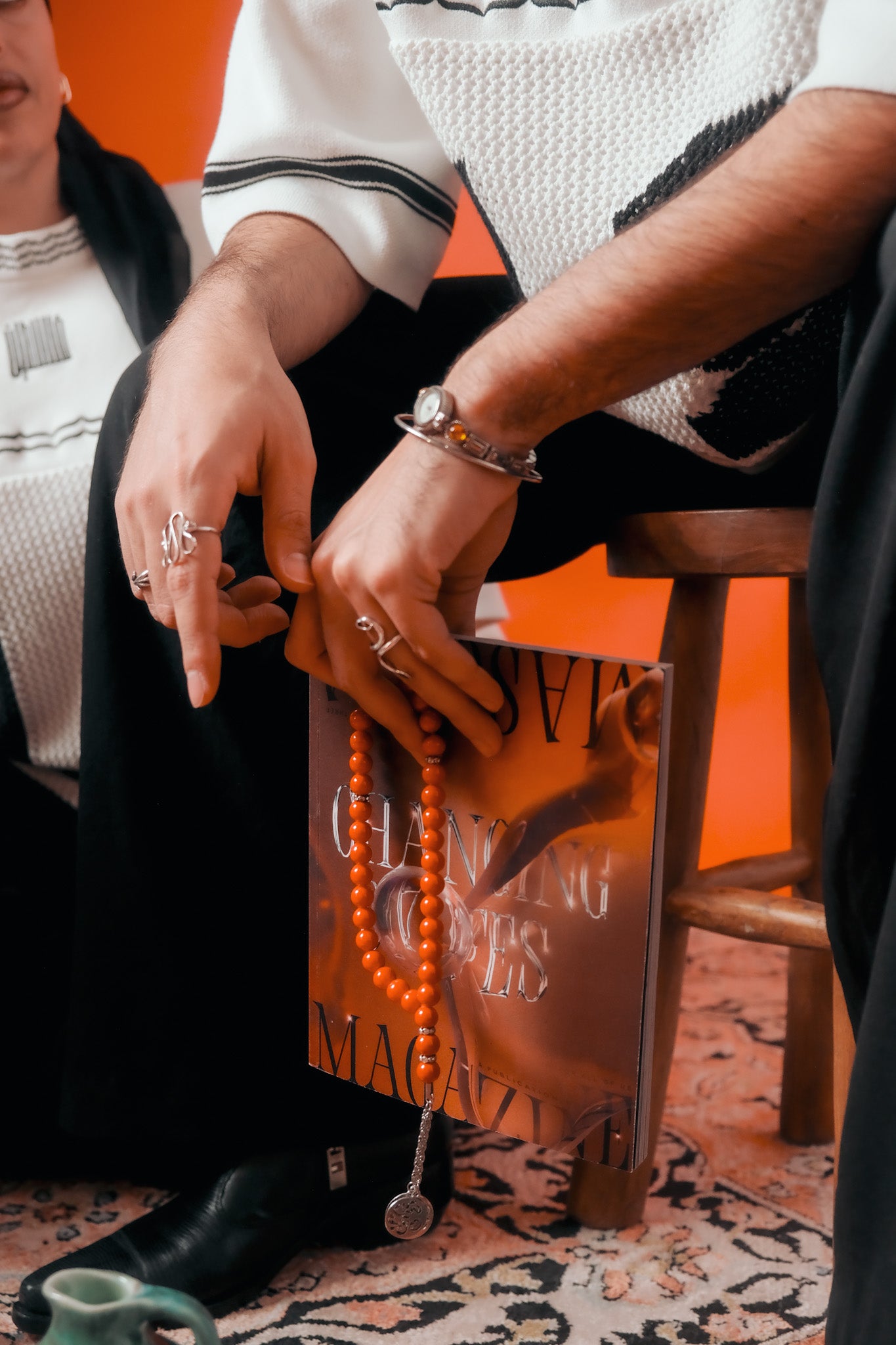
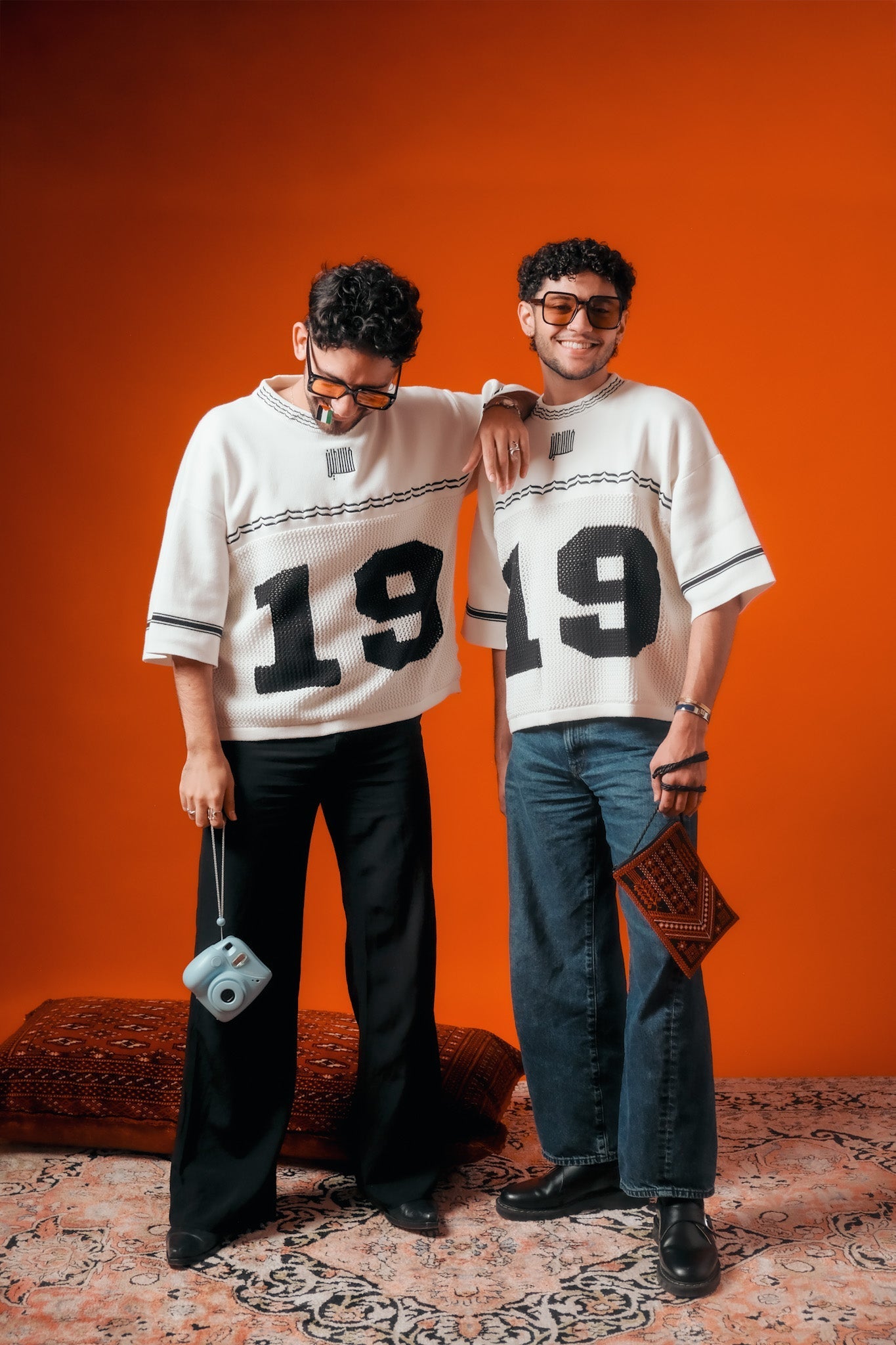
Our Keffiyeh Knit Jersey is the clearest expression of that philosophy. Instead of printing the pattern onto fabric — the fast-fashion shortcut — we built it into the garment itself through knit construction. The motifs live in the structure of the piece, the way they were always meant to: woven, not stamped. It's a tribute piece, designed to be worn by anyone who understands (or wants to understand) what the pattern represents.
The Mohair Keffiyeh Cardigan takes the same heritage in a softer direction — the traditional geometry rendered in mohair, made for the person who wants their everyday layers to carry meaning without shouting.
Every piece follows the same rules we set for ourselves from day one:
Ethical sourcing. We know where our materials come from and who makes our garments. Heritage-inspired fashion made in exploitative conditions would be a contradiction we're not willing to live with.
Design with intention. Nothing goes on a KADENCCI® piece "because it looks cool." Every motif is researched. Every placement is deliberate. If we can't explain why an element is there, it doesn't make the cut.
Giving back, built in. Our philanthropy model ties giving directly to what we sell — meals provided for every product purchased. It's not a seasonal campaign or a marketing checkbox. It's how the business works, permanently. Every piece made for the steadfast means someone eats because of it.
Why Heritage Fashion Matters More Than Ever
We're living through a strange moment in fashion. Trends move at the speed of an algorithm. A pattern can go from obscure to everywhere to "over" in six weeks. Clothes have never been cheaper, more abundant, or more disposable.
And yet — the pieces people actually treasure, the ones they keep for decades and hand down, almost always have one thing in common: they mean something.
Heritage fashion pushes back against disposability in the best way. A garment rooted in centuries of cultural history can't be "over" by next season, because it was never about the season. The keffiyeh pattern predates every trend cycle you've ever lived through, and it will outlast every one still to come.
There's also something deeper happening. For members of a diaspora, wearing heritage-inspired pieces is a way of carrying home on your shoulders — literally. For everyone else, it's an invitation into a story, a starting point for curiosity, a reason to ask questions and learn.
That's what clothing can do when it's made with intention. It starts conversations that matter.
How to Wear Heritage Pieces with Respect
If you're new to cultural fashion, here's the honest, no-gatekeeping guide:
Learn the story first. You don't need a degree in Middle Eastern history — but read a little. Know what the olive leaves mean. Understand why the pattern matters. (If you've read this far, you're already doing it.)
Buy from brands that honor the source. Ask where the design inspiration comes from, whether the brand names and credits the culture, and whether any value flows back to the community. If a brand can't answer those questions, that tells you something.
Wear it like you mean it. A heritage piece isn't a costume and it isn't a prop. Style it into your real life — with denim, with tailoring, with whatever your everyday looks like. Cultural minimalism was designed for exactly this: heritage that lives in the modern world, not behind glass.
Be ready for the conversation. Someone will eventually ask about what you're wearing. That's a feature, not a bug. Being able to say "this pattern represents the olive trees of Palestine, and the brand that made it provides meals with every purchase" — that's the whole point.
The Thread That Connects Us
Here's what we've learned building KADENCCI®: people are hungry for meaning. Not manufactured meaning — the real kind. The kind that comes from centuries of hands weaving the same pattern, from olive trees older than nations, from a piece of cloth that farmers wore into fields and grandmothers folded with care.
Fashion at its emptiest is just fabric. Fashion at its fullest is memory you can wear.
The keffiyeh has survived everything the last century threw at it — commodification, politicization, imitation — and its meaning is still intact, still potent, still recognized around the world. That kind of endurance can't be designed in a boardroom. It can only be inherited, honored, and carried forward.
That's what we're trying to do with every stitch.
For the Steadfast.